Reward Selection
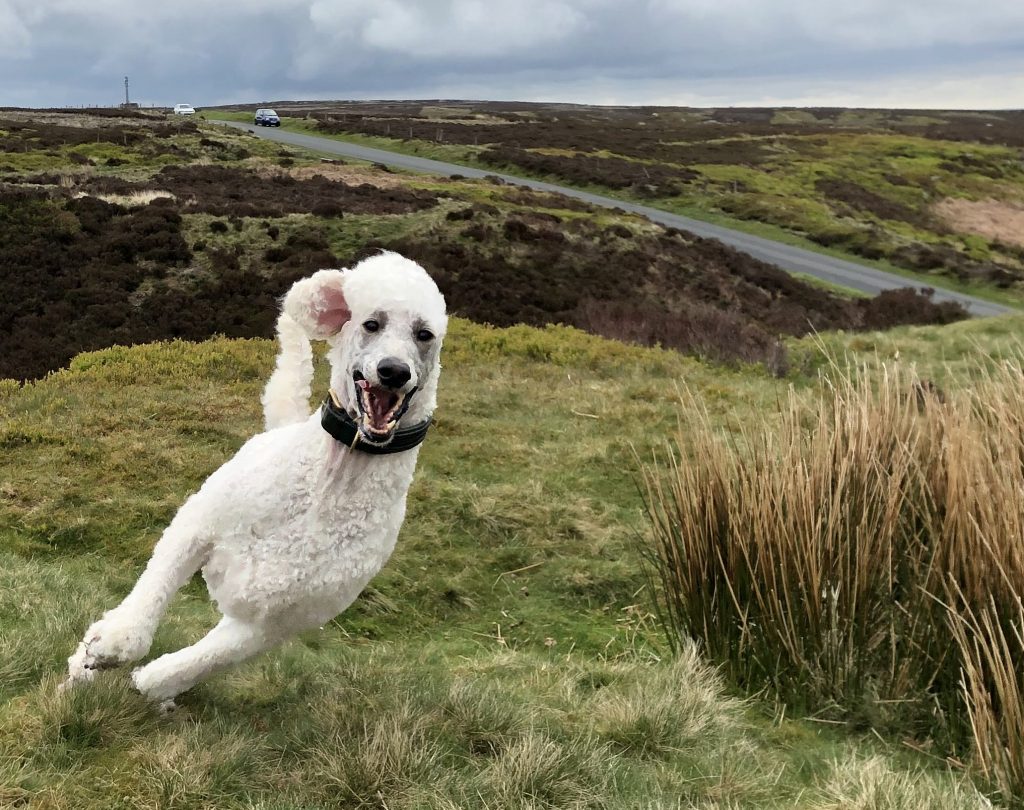
“Hey! There’s a treat…”
Reward Selection
(Objective: To identify which rewards can be used to reinforce a desired behaviour during training.)
Dog training rewards can be anything your dog enjoys and that motivates them to repeat desired behaviours. Common types include,
- Food treats,
- Toys,
- Praise,
- Petting / Fussing,
- Access to activities they enjoy, e.g. Playing a tug game.
The key is to find rewards that your dog finds valuable and that easily delivered consistently and immediately after the desired behaviour.
Why?
Real life application: You will identify a way of increasing the level of success in training behaviours.
Likely Life Rewards: Supports force free positive reinforcement training methods.
Preparation.
Reward selection can be done at home. It is best done with no other dogs being present and at a quiet time that is free of distractions. Initially, your dog should be in an unexcited mood. Always carefully consider any food treats and keep the following in mind,
- Be aware if your dog has allergies when choosing treats.
- Visit a trusted dog food retailer, who stocks a good choice of treats, and take their advice.
- Food based rewards are usually what’s needed.
- Kibble type dog food can be fed, dropped and thrown and this is best for training.
- Some human food can be a good choice but beware that certain ingredients can be harmful to your dog. eg. some peanut butter should never be used, although some is excellent.
- Do your research if you intend to use any human food stuffs – don’t presume your dog is safe with what you eat.
- Do not use mushrooms as treats – your dog might eat poisonous mushrooms when on walks if they are “trained” regard them as treats.
- Fresh vegetables, such as carrot sticks, can be very useful.
- Cheese is popular as small chunks or squeezed from a tube directly to the dog’s mouth or on a licking mat, chew toys, etc.
- Pate and meat paste is very good and can be applied to feeder type chew toys and licking mats.
- Use a selection of toys if food is not attractive to your dog.
- Praising and petting may be suitable if other “rewards” don’t work.
- Try fun movements or a favourite game. eg. Catch a ball, a squeaky tug toy, etc.
Gather the equipment and rewards required,
- Have a number and variety of high value treats to hand.
- Pen and paper with the names of the potential rewards already listed
Tell any human companions exactly what you want them to do and not to do
Notes:
If the dog is excited or anxious they may not take a reward. It may take a little while for them to become interested in the test rewards.
When training there are circumstances when you dog may refuse all and any rewards. Such as,
- The first few minutes of a new situation,
- When there’s a distraction. e.g. a dog barking in the distance,
- When they are sniffing objects,
- Looking to do their toilet,
- Getting to know another dog.
It can’t be guaranteed that the chosen rewards will always be the only ones to use, but it is a helpful exercise. You can repeat it in the future if your dog’s tastes change.
Starting positions:
- Handler: The tester sits with the potential rewards to hand but out of sight. e.g. on a worktop and possibly covered.
- Dog: In front of the tester.
Audible & Visual Cues.
- Audible cues: Just the use of the dog’s “Name”. should suffice to attract their attention to your hands.
- Visual cues: The testers hands,
- As loose fists containing edible treats with the fingers facing upwards or
- Holding two toy, etc.
Testing.
Layer 1: The tester chooses the two different potential rewards and holds them at sniffing height for the dog.
- The hands should be held equidistant from the dog’s face so as not to suggest one reward over the other. If you need to get the dog’s attention, just use their “name”.
- If the dog does not take either of the rewards, immediately, change them for two more and repeat the above.
- Mark the rewards’ entry on the paper list with a tick or a cross.
If the dog takes a reward move to layer 2.
Layer 2: The tester picks a different reward to replace the “losing” reward, for one hand, and picks the “winning” reward again, for the other. It’s a “winner stays on” system.
- The hands are again, held at sniffing height for the dog as previously.
- If the dog takes a reward, mark the rewards’ entry on the paper list with a tick or a cross.
Repeat layer 2 until all rewards have been tested.
Next?
- You should now know which rewards to use to support your dog’s training. It can’t be guaranteed that the chosen rewards will always be the only ones to use, but it is a helpful exercise. You can repeat it in the future if your dog’s tastes change.
When you are happy that you have completed this exercise, please complete the simple online feedback form below to let us know how you got on, how inventive you had to be, and what your dog really, really, likes.


 Clever K9s